
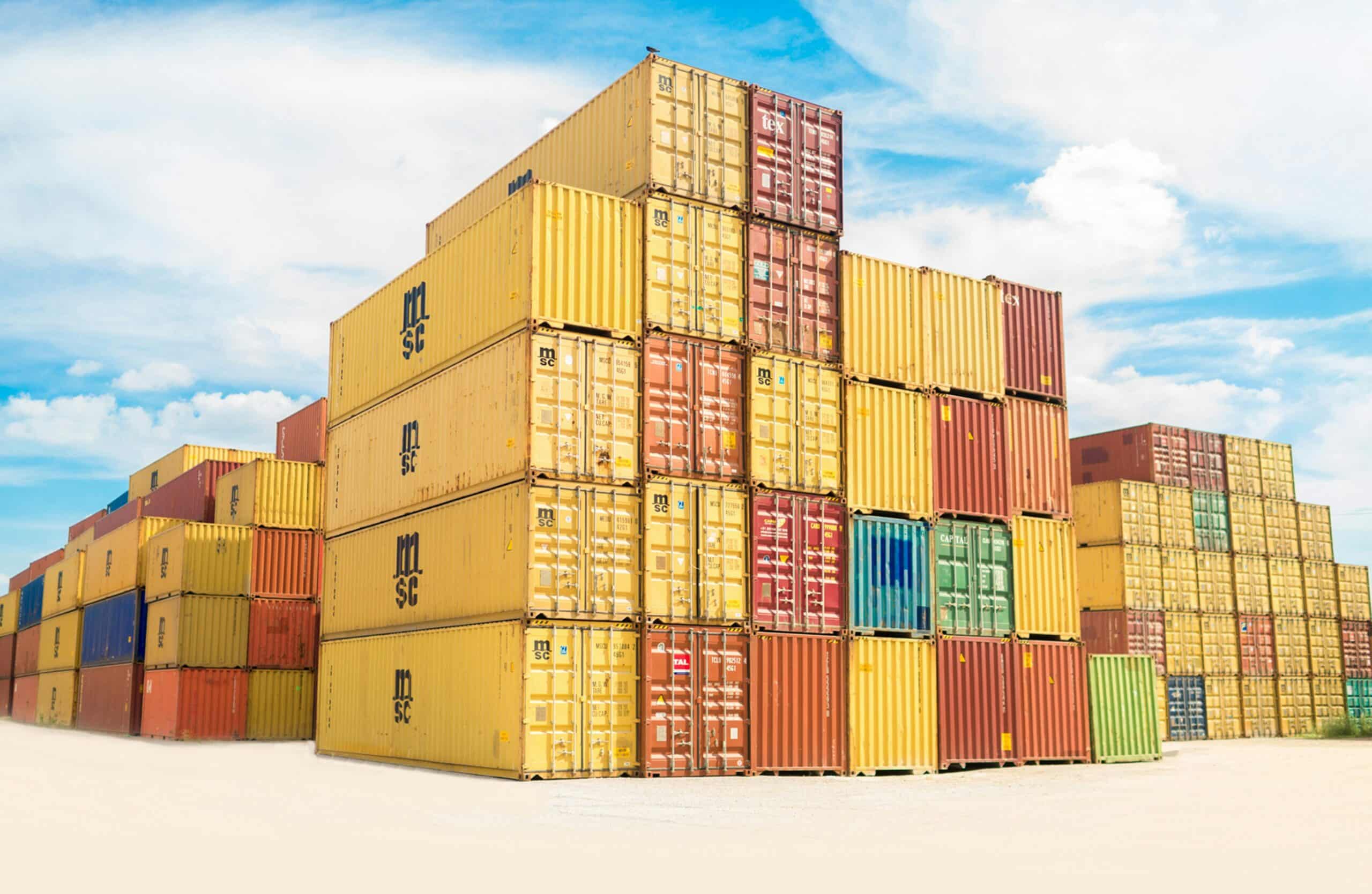
Every year, billions of dollars in cargo is lost or damaged during transit, not because of theft or natural disaster, but because of inadequate securement. Intermodal freight, cargo that moves by truck, rail, and ocean in a single journey, now forms the backbone of global supply chains, and each mode introduces its own forces, regulations, and risks. A load secured well enough for a dry van may shift violently in a rail classification yard. A container packed for road may fail at sea. This guide gives logistics professionals, shippers, and 3PLs a practical, regulation-grounded overview of how to protect cargo across the full intermodal journey.
Understanding the Forces
Effective securement starts with understanding what cargo is up against. Each mode applies a different profile of physical stress to your freight.
On a truck, the primary forces are longitudinal, from acceleration and hard braking, along with lateral forces in turns. Typical braking generates around 0.8G; cornering generates around 0.5G. On rail, the bigger concern is shock loading, the sudden high-G impacts that occur when cars are coupled in classification yards (a process called humping), which can produce longitudinal forces of 2-4G or more. At sea, cargo faces sustained rolling, pitching, and heaving, often at 0.3-0.5G transverse across an entire ocean crossing.
The takeaway: a 1,000-pound pallet that feels stable in a warehouse can exert thousands of pounds of force on its restraints in transit. Securing cargo means engineering for the worst-case forces at every stage of the journey, not just one.
Governing Standards
Cargo securement is regulated differently by mode. Knowing which rules apply and who is responsible for compliance is foundational to any intermodal program.
For truck transport in North America, the FMCSA sets the rules under 49 CFR Part 393. These specify working load limits for tie-downs, minimum tie-down counts by cargo weight and length, and anchor point requirements. For rail, the Association of American Railroads (AAR) governs through Circular 43-I and the Intermodal Loading Guide. It covers how freight must be loaded, blocked, braced, and secured inside containers. For ocean shipments, the IMO/CTU Code of Practice for Packing of Cargo Transport Units outlines shipper obligations for container packing. And the SOLAS convention requires a verified gross mass (VGM) for every packed container before it can be loaded onto a vessel.
Truck Securement
The core FMCSA requirement is that the combined working load limit (WLL) of all tie-downs must equal at least 50% of the cargo weight, with a minimum number of tie-downs determined by cargo length and weight. Tie-down angle matters too: a steep angle provides less effective restraint than one running closer to horizontal.
Equipment type shapes your securement approach. Dry van trailers offer enclosed protection but limit options to load bars, strapping to wall and floor anchor points, and friction management with anti-slip mats or rubber pads. Reefer trailers are particularly challenging because their smooth aluminum floors are low-friction, making anti-slip mats and tight pallet wrapping essential.
Common failures include insufficient tie-down WLL, straps applied over packaging rather than the cargo itself, missing edge protectors, and inadequate blocking for irregular freight. Pre-departure inspection and documentation are non-negotiable.
Rail Securement
Rail introduces forces that road transport does not. The shock of humping in a classification yard can far exceed anything a truck shipment encounters, and cargo that survives a cross-country truck run may arrive at a rail destination with contents toppled or shifted if it wasn’t loaded with rail forces in mind.
The AAR’s Intermodal Loading Guide and Circular 43-I govern how freight must be loaded in containers through the North American interchange network. The key principle: all void space must be filled or blocked. Airbags are widely used to fill gaps between cargo and container walls and can be inflated to precise pressures for controlled resistance. Blocking and bracing provide rigid support against longitudinal and lateral movement.
Ocean and Maritime Securement
The CTU Code places responsibility for proper container packing squarely on the packer, usually the shipper or their consolidator. Key obligations include verifying the container is fit for use, distributing weight evenly across the floor, securing all cargo against the forces it will encounter at sea, and providing a container packing certificate with the shipping documentation. A missing or inaccurate packing certificate can void insurance coverage and create serious liability.
VGM submission is mandatory under SOLAS. Shippers can comply by weighing the packed container directly or by calculating container tare weight plus the verified weight of all contents. Containers without compliant VGM will not be loaded.
Inside the container, heavy items belong on the floor, centered longitudinally and distributed side to side evenly. Void spaces between pallets and at the container doors should be filled with airbags or foam dunnage. For reefer cargo, blocking the air return duct at the container floor is a common and costly mistake. Pre-cooling the container before loading, maintaining airflow around all cargo surfaces, and verifying the reefer unit’s operation are standard practices for temperature-sensitive freight.
The Transfer Challenge
The handoff between modes is where cargo is most vulnerable. Crane handling during transfer introduces lateral swing, sudden load arrest, and angular loading that can shift cargo that survived the preceding leg without incident.
Before any mode transfer, inspect the container externally: check walls, doors, and corner castings for damage, verify seals are intact, and note any findings on the interchange receipt. For high-value freight, smart container sensors that log door openings, impacts, tilt, and temperature provide invaluable data if a claim arises.
Liability in intermodal transport follows a patchwork of conventions. Ocean carrier liability under Hague-Visby or Rotterdam Rules is often far below the cargo’s commercial value. Domestic rail liability falls under the Carmack Amendment. Shippers should carry all-risk cargo insurance covering the full CIF value across all modes and review policies for intermodal exclusions that may create gaps at transfer points.
Packaging and Documentation
No securement system compensates for poor primary packaging. Pallets should be in good condition, properly stretch-wrapped with bottom wraps anchored to the pallet itself, and sized with ISO container dimensions in mind. GMA pallets leave significant void space in a 20-foot container; euro or block pallets can improve efficiency and reduce dunnage requirements. Edge protectors are essential wherever straps cross packaging corners.
On the documentation side, note any cargo condition issues on the bill of lading at each stage. A clean BOL is the baseline against which damage claims are measured. For ocean shipments, the shipper’s own packing records are critical evidence since carriers issue BOLs noting only “said to contain” without opening the container.
Quick Reference Checklist
Pre-shipment: Identify all modes and their force profiles. Select packaging for the most demanding mode. Confirm regulatory requirements. Prepare VGM and packing certificate for ocean moves. Verify cargo insurance across all modes.
Truck: Total tie-down WLL at least 50% of cargo weight. Minimum tie-down count per FMCSA 49 CFR Part 393. Edge protectors on all strapped cargo. Heaviest freight forward against the bulkhead. Anti-slip mats in reefer trailers.
Rail: Follow AAR Circular 43 and the Intermodal Loading Guide. Fill all void space. Account for 2-4G longitudinal shock. Use airbags between the cargo and container walls.
Ocean: Submit a compliant VGM before tendering. Even weight distribution with heavy items centered on the floor. All cargo secured to lashing rings. Voids filled with dunnage. Packing certificate issued. Reefer pre-cooled with air circulation confirmed.
Intermodal securement is not a checklist for each mode in isolation. It is an integrated discipline that spans the entire journey, from the warehouse floor to the final delivery point. The shippers who get it right are the ones who plan for all modes from the start, choose packaging that performs across the full route, document every handoff, and carry insurance that reflects their actual exposure. Understand the forces, know the rules, and never assume that cargo secured for one mode is ready for all.
Protect Your Freight with Logistick
For 35 years, Logistick has engineered one-way, recyclable cargo securement systems for road, rail, and ocean freight. Proudly made in the U.S.A. from durable, recyclable materials, our product lineup spans every enclosed application — from Loadbar Systems and Wedge Systems for dry vans and intermodal containers, to Strapping Systems, Floor Braces, and void-fill dunnage for ISO-container ocean export. Systems are AAR-approved where applicable, easy to install, and built to reduce damage claims.
Ready to see the difference? Request a free sample and put Logistick to the test on your next shipment.
0 Comments