
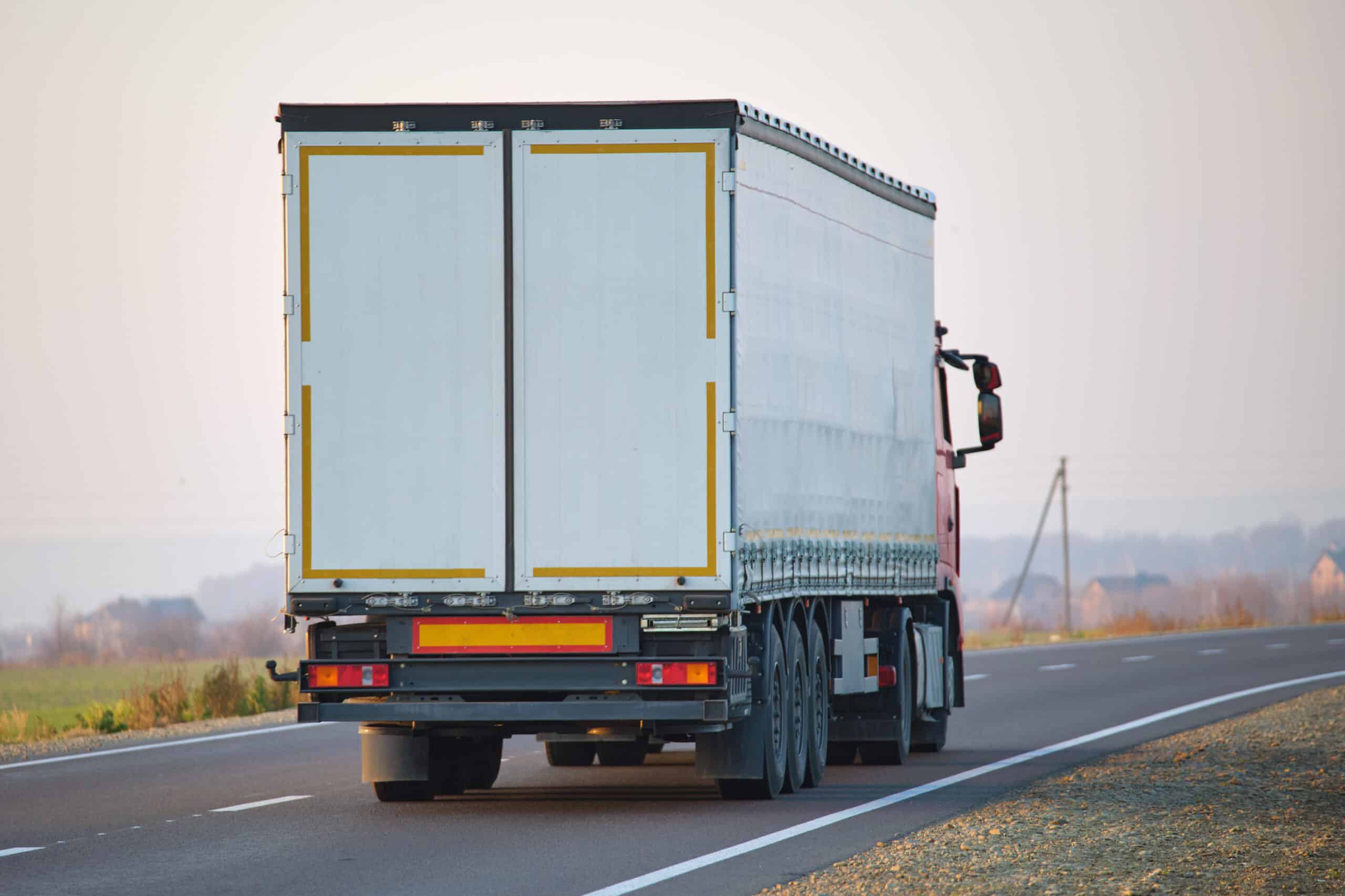
Load shift prevention in enclosed trailers starts before the trailer leaves the dock. Freight may look stable after loading, but braking, acceleration, vibration, and road shock can quickly expose weak points in the securement setup. In many cases, the problem is not that the load was unsecured. It is that the load was secured in a way that still allowed movement to begin.
Systems that rely on tension can lose effectiveness over time, while structural bracing physically blocks freight from moving in the first place. That is why floor-based and wall-based bracing systems offer a more controlled, repeatable way to prevent freight shifting inside enclosed trailers.
What Is Load Shift Prevention in Enclosed Trailers
Load shift prevention in enclosed trailers involves using securement methods to prevent freight from shifting during transit. Some methods restrain freight by applying tension. Others prevent movement by blocking freight with structural contact points against the trailer floor or walls.
Structural bracing is often more consistent because it removes space where movement can start. Instead of relying solely on maintained tension, it creates a physical barrier that helps keep freight in place throughout the trip.
What Causes Load Shift in Enclosed Trailers
Even in a standard dry van, freight is constantly under stress. Every mile introduces force. Acceleration pushes freight toward the rear. Braking drives it forward. Road vibration works against anything that is not firmly blocked. In longer or intermodal moves, repeated handling and changing transit conditions only increase the risk.
Most load shift problems start small. Common causes include:
- Gaps between pallets and trailer walls
- Slight differences in how crews install securement
- Tension-based systems relaxing over time
- Inadequate blocking at the base of the load
- Securement methods that are not matched to load weight or trailer conditions
Once a load starts moving, it does not stop on its own.
Freight settles. Weight redistributes. Pressure shifts to weak points in the load or packaging. By the time the trailer is opened, the result may be product damage, unstable pallets, or a shipment that has to be reworked before it can be unloaded safely.
Structural Bracing vs. Straps for Load Shift Prevention
Tension-Based Methods
Straps, bands, and load locks all work by applying force to hold freight in place. When installed correctly, they can be effective. But performance depends on consistent technique, proper tension, and conditions that remain relatively stable throughout transit.
Common failure points tend to look like this:
- Tension is not rechecked after loading
- A strap loosens during transit
- Installation varies between shifts or facilities
- The load settles and reduces the original holding force
That does not mean tension-based methods are ineffective. It means their performance can change when real-world variables change.
Structural Bracing
Structural bracing takes a different approach. Instead of trying to hold freight in place with tension, it removes the space where movement can begin.
By creating solid contact points against the floor and walls, structural systems turn open trailer space into fixed boundaries. Freight no longer depends on strap tension to remain stable. It is physically blocked from shifting.
That difference matters in operations where loads travel long distances, pass through multiple handling points, or move through rail, truck, and container environments. Once installed correctly, structural bracing provides a more repeatable result from departure through delivery.
How Structural Bracing Handles Transit Forces
One of the clearest advantages of structural bracing is that it addresses the forces freight actually experiences in transit.
Under braking, freight wants to move forward. A wall-based bracing system creates a rigid stop that helps prevent the motion before it builds up. Under acceleration, the load can shift rearward if there is space to move. At floor level, base movement can begin even before the upper portion of the load appears unstable. That is where floor bracing becomes critical.
There is also side-to-side movement to consider. Turns, lane changes, and uneven road surfaces create lateral force that can destabilize pallets or floor-loaded freight, especially if the base is not properly contained. Vibration adds another layer. Over time, repeated vibration can reduce strap tension, loosen marginal securement, or allow small gaps to become bigger ones.
Structural bracing is effective because it addresses these forces through contact and resistance, not just tension. It creates hard boundaries that help control movement at the points where movement usually starts.
Floor-Based Bracing with Floor Brace Systems
Floor-level movement is often the first stage of load shift. If the base of a pallet or floor-loaded shipment moves, everything above it becomes more vulnerable.
Floor Brace systems address this by creating a fixed barrier at the base of the load. Installed directly into wood trailer floors, they anchor against the freight and help prevent it from sliding under pressure. This gives operations teams a practical way to create consistent floor-level blocking without relying solely on cut lumber.
The setup is straightforward. After loading, braces are positioned against the pallet or freight and secured to the floor. The number of braces depends on the weight and configuration of the shipment:
- One brace for lighter shipments
- Two braces for moderate loads
- Three braces for heavier or high-density freight
Floor Brace XL, from Logistick, is designed for higher load demands and is well-suited for more demanding environments, including intermodal applications. In operations where shipments face more force, more handling, or more variability, that added strength matters.
What makes floor-based bracing especially useful is consistency. Traditional wood blocking depends on how each piece is measured, cut, and installed. Floor Brace systems simplify that process and make outcomes easier to repeat across different crews, shifts, and facilities.
Wall-Based Bracing with Wedge Systems
While floor bracing stabilizes the base, wall-based bracing addresses one of the most common causes of freight damage in enclosed trailers: forward movement.
When a driver brakes, the load pushes toward the front of the trailer. If there is space for it to move, even slightly, the force builds quickly. Wedge systems are designed to stop that movement by creating a rigid barrier across the trailer’s width.
The process is simple:
- Wedges are installed on opposite walls at the same height
- A wood beam is inserted between them
- The beam is driven into the wedge ramp until it locks into place
As the beam is forced into position, it creates outward pressure against the trailer walls. That pressure is what gives the system its holding strength. Instead of relying on a strap that may loosen or a temporary brace that may vary from installer to installer, wedge systems create a physical stop that remains in place once properly installed.
Different wedge options support different load requirements:
- Wedge XL for medium-weight applications
- Super Wedge XL for the highest load demands and maximum strength
This approach turns empty trailer space into a structural bulkhead. That is a major difference in how these systems perform. They do not just restrain freight. They help eliminate the room freight needs to shift.
Combining Floor and Wall Bracing for Full Load Control
Floor and wall systems solve different parts of the same problem. When used together, they create a more complete cargo securement system for enclosed trailers.
Floor bracing controls movement at the base of the load. Wedge systems control forward movement and help contain the load within a defined space. Together, they provide support from multiple directions, which reduces the chance of shifting under changing transit conditions.
This combined approach is especially useful for:
- Heavy or high-density freight
- High-value shipments where damage risk is costly
- Loads moving through intermodal networks
- Operations trying to standardize securement across facilities
For many shippers, the goal is not just to secure one load. It is to create a repeatable process that performs reliably across many loads. Combining floor and wall bracing helps move securement in that direction.
Installation Overview
Even the best cargo securement products depend on proper installation. Small details in setup can make a meaningful difference in performance.
For floor bracing, the basic process is to clear debris from the floor, position the brace tightly against the freight, and secure it correctly. Placement matters. The brace needs to contact the freight where it can actually resist movement, not just touch the edge of a pallet loosely.
For wedge systems, wall preparation matters just as much as beam fit. The wall surface should be clean and dry before installation. Wedges should be installed at equal heights on opposite walls, and the beam should be cut correctly so the system creates enough pressure when locked into place.
A beam that is too short will not generate enough pressure. A surface that is not properly cleaned can affect adhesion. These are small steps, but they have a direct impact on how well the system performs during transit.
When to Use Floor Braces vs. Wedge Systems
Choosing the right securement method depends on how the load behaves and where the risk is highest.
Use Floor Brace systems when the main concern is movement along the trailer floor. This is common with palletized shipments, dense freight, and floor-loaded cargo, where base stability is critical.
Use Wedge systems when the primary risk is forward movement, especially when there is open space between the load and the trailer walls.
Use both systems together when the shipment is heavy, irregular, high value, or likely to face more demanding transit conditions. In those cases, controlling only one type of movement is often not enough. The best results come from addressing both the base of the load and the surrounding space.
Why Many Operations Move Beyond Wood and Straps Alone
Traditional securement methods still have a place, but they also introduce variability.
Wood blocking takes time to cut, fit, and install. Results can vary depending on who is doing the work and how much time they have. Straps and bands depend on tension, which can change after the load begins moving.
Structural bracing offers a more controlled alternative. It helps create a more standardized process and reduces reliance on individual technique. That can lead to:
- More predictable performance across shipments
- Faster installation in repeat applications
- Less variation between crews
- Reduced dependence on heavy lumber setups
For operations focused on reducing damage, improving consistency, and simplifying securement, these advantages are practical.
Conclusion
Load shift is rarely caused by one obvious mistake. More often, it starts with small gaps, inconsistent installation, or securement methods that weaken over time. Once movement begins, the problem builds.
Floor Brace and Wedge systems address load-shift prevention in enclosed trailers by eliminating the conditions that allow movement to begin. Instead of relying on tension alone, they create structural support at the floor and wall level. That produces a more stable and predictable environment inside the trailer.
For teams trying to reduce freight damage, improve securement consistency, and create systems that work across real shipping conditions, structural bracing offers a more controlled approach.
Get Help Building a Securement System That Works
Every load presents a different challenge. Freight type, weight, trailer configuration, and shipping conditions all affect which securement system will perform best.
If your operation is dealing with freight damage, recurring load shifts, inconsistent installs, or uncertainty about current methods, it may be time to rethink the system rather than keep adjusting the same approach.
Logistick works with shippers and operations teams to help build securement systems that match real-world conditions. That means looking at how freight is loaded, where movement starts, and which combination of floor and wall bracing makes the most sense for the application.
If you want a more reliable, repeatable, and better-suited-to-your-operation securement system, contact Logistick to talk through your application and get guidance on a solution that works.
0 Comments