
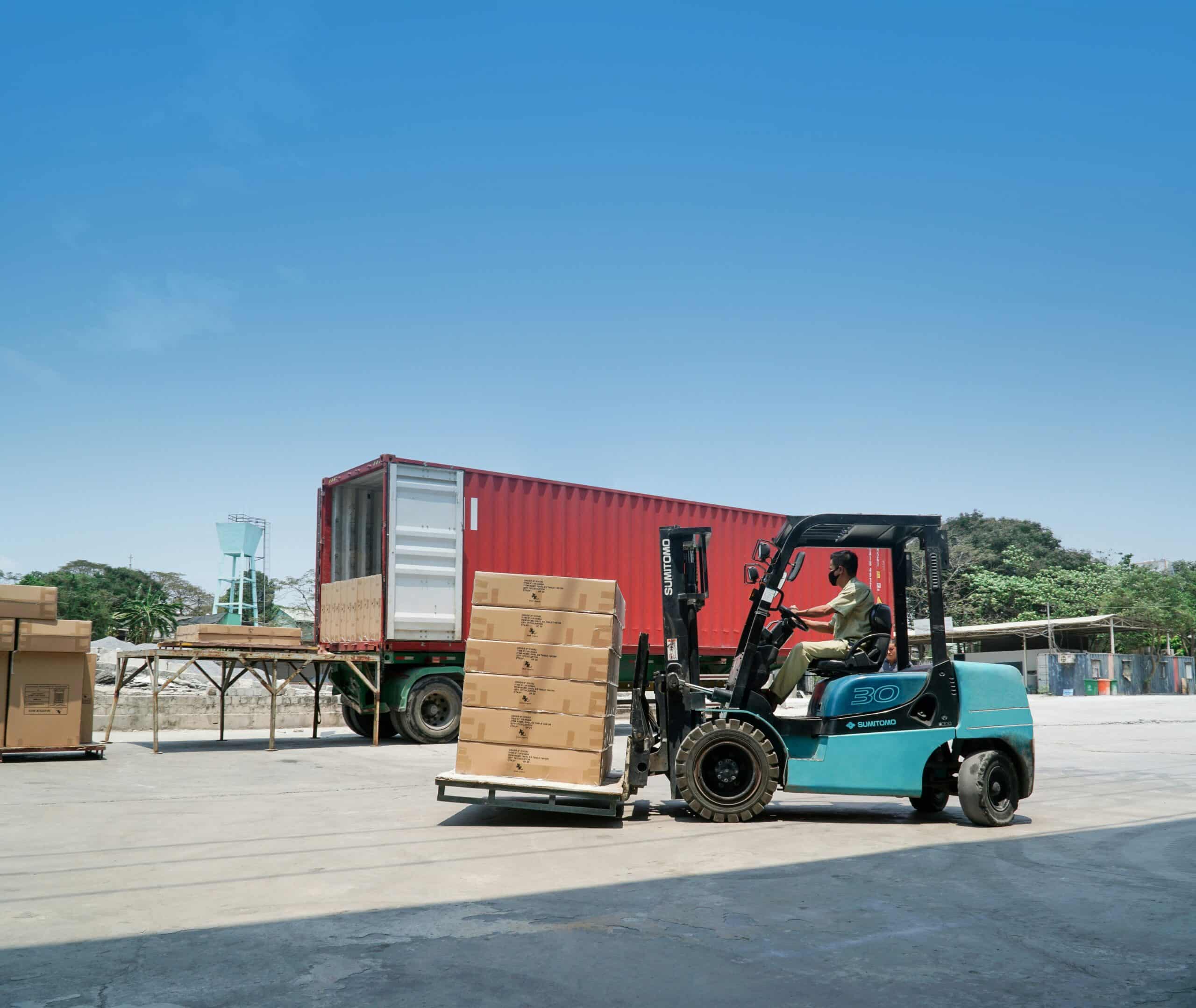
The right cargo securement system depends on what you are shipping, how the freight is loaded, which transportation modes it will encounter, and whether the equipment needs to return. Loadbars work well behind stable pallet rows. Wedges and floor braces typically provide stronger structural restraint for heavier or more demanding loads. Strapping Systems adapt to irregular freight, while air bags and void fillers control movement into open spaces. Many loads need more than one system because no single product controls every direction of movement. Let’s take a look at how to choose the right cargo securement system for your cargo.
Start With the Freight Scenario
A cargo securement system should match the load rather than simply being the product a facility has always used. Freight weight is also important, but it is only one part of the decision. The commodity’s shape, packaging, center of gravity, pallet configuration, and pressure sensitivity all affect how it should be secured. A stable row of boxed products presents a different challenge from machinery, drums, paper products, or mixed freight. The amount and location of empty space also matter because freight can build momentum when it has room to move.
Transportation mode adds another layer. Highway, rail, and ocean transportation expose freight to different forces. A system that performs well during a highway trip may not be suitable for the longitudinal forces associated with rail or the repeated rolling and pitching experienced during an ocean leg in an ISO container.
Once those details are understood, buyers can begin comparing the major product families.
Loadbar Systems for Stable Pallet Rows
Loadbar Systems create a rigid barrier across an enclosed trailer. Logistick Loadbars use two pockets attached to opposing walls and a 2×4 installed horizontally between them. The beam sits against the rear face of the freight to prevent it from gaining momentum. This product family is often a practical choice for light- to medium-weight cargo arranged in stable, uniform pallet rows. Because the beam spans the trailer, one correctly selected system can restrain a cargo section without routing a strap around each pallet.
Loadbar Wide® is designed for many modern standard-width trailers and uses a 96-inch 2×4. Loadbar XL® is geared for slightly more narrow trailers, including refrigerated trailers
Loadbars are also useful for one-way routes. Unlike conventional reusable metal loadbars, a one-way Logistick system does not need to be tracked, stored, or returned to the shipping facility. That can reduce loss and return costs when trailers or equipment do not come back.
Wedge Systems for Stronger Longitudinal Restraint
Wedge Systems use opposing wall-mounted components and a horizontal wood beam to form a strong bulkhead. The beam is forced into the wedge pockets, creating outward pressure against the walls. Wedges primarily restrain forward longitudinal movement. They should not be described as a solution for lateral movement. Side-to-side movement may require airbags, void fill, strapping, or another suitable method in addition to the wedge system.
Wedge products are available for different trailer and container walls. Wedge XL® is designed for medium-weight loads in smooth-sided trailers. Super Wedge® XL is the strongest wedge in the line, built for the heaviest loads in smooth-sided trailers and containers. For corrugated walls, Intermodal Wedge® secures light- to medium-load domestic intermodal and ISO containers and fits either the peak or the valley, while Intermodal Wedge® XL adds a matching brace and roughly 50 percent more strength for medium- to heavy-load freight. Wedge International® is engineered for the valley of a standard ISO container wall, where the larger adhesion surface exposes more tape for maximum holding strength.
Floor Braces for Movement at the Base
A floor brace controls freight where many load shifts begin. Instead of spanning the trailer between opposing walls, it mounts to a suitable wood floor and creates a barrier at the base of the cargo.
This can be valuable for dense pallets and loads that may slide along the floor. A top restraint alone may not prevent the bottom of a pallet from moving, especially when the cargo has a high center of gravity. Blocking the base can help keep the load from leaning or tipping as the trailer accelerates or stops.
Floor braces are not interchangeable with wall-mounted systems. Before selecting one, confirm that the enclosed trailer or ISO container has a compatible wood floor and that the product is suitable for the load weight and transportation mode. Floor braces may also be used as part of a layered plan with wedges, strapping, or void control.
Strapping Systems for Irregular Freight
Strapping Systems secure cargo through tension. They are often more adaptable than a rigid beam when the load has an uneven face, contains mixed products, or needs restraint at a specific height. Logistick offers several types of Strapping Systems, including adhesive-mounted anchors, banding, buckles, E-track ratchet straps, and related equipment. Product selection depends on the enclosed trailer or container and the available anchor points.
For example, E-track ratchet straps attach to existing E-track rails inside an enclosed trailer. Other Logistick systems create temporary anchor points on suitable walls, allowing banding or a compatible ratchet strap to be positioned around regular or irregular freight.
Strapping can also reinforce a structural system. Some wedge products include anchor slots that allow them to be paired with an appropriate strapping method. In that arrangement, the wedge provides forward longitudinal restraint while the strapping adds control where the load needs it.
The tradeoff is labor and inventory. Reusable straps must be inspected, stored, recovered, and returned. Disposable banding requires cutting and proper disposal. Ready-to-use kits and integrated tensioning systems may reduce preparation time, but the best choice depends on shipment volume and loading workflow.
Air Bags and Void Fillers for Open Space
Air Bags and Void Fillers help prevent freight from moving into gaps between pallets or between the load and the trailer or container wall. They are particularly useful for controlling lateral, side-to-side movement.
An air bag is placed in a suitable void and inflated to the specified pressure. Other void fillers occupy open space without inflation. Corner protectors and related dunnage can help spread pressure or protect vulnerable packaging.
Void fill works best as part of a complete securement plan. It keeps freight from drifting into open space, but it generally does not replace the structural restraint needed to stop heavy cargo from moving forward. If a shipment has both a large rear void and side gaps, it may need a Loadbar or wedge for longitudinal restraint plus air bags or void fillers for lateral control.
Consider One-Way and Round Trip Costs
Reusable equipment can be cost-effective when the operation controls the trailer and can reliably recover, inspect, and store the products. However, the purchase price does not represent the entire cost.
Reusable bars and straps may be lost, left at a customer facility, or unavailable for the next load. Employees must also spend time collecting, inspecting, organizing, and returning them. These costs can make a reusable system less economical on one-way or irregular routes.
A one-way system travels with the freight and does not require a return process. This can simplify inventory management and keep securement equipment from becoming a source of delays. Buyers should compare total installed and operational costs instead of focusing only on the initial product price.
Account for Installation Labor
Every securement method adds steps to the loading process. Loadbars and wedges may require surface preparation, trailer measurements, and lumber. Strapping Systems involve selecting anchors, routing material, applying tension, and managing unused webbing or banding. Air bags require correct placement and inflation.
A product that is easy to purchase but difficult to install consistently can create errors at the dock. Buyers should consider how quickly employees can learn the system, what tools are required, and whether the process can be standardized across shifts and facilities. The best system is the system that fits the load and can be installed correctly every time.
Find the Right Fit for Your Freight
Choosing a cargo securement system is easier when you begin with the freight scenario rather than a familiar product. The commodity, transportation route, enclosed trailer or ISO container, return process, and available labor all point toward the right solution. If you are comparing several product families, Logistick can review your load details and help narrow the options.
0 Comments