
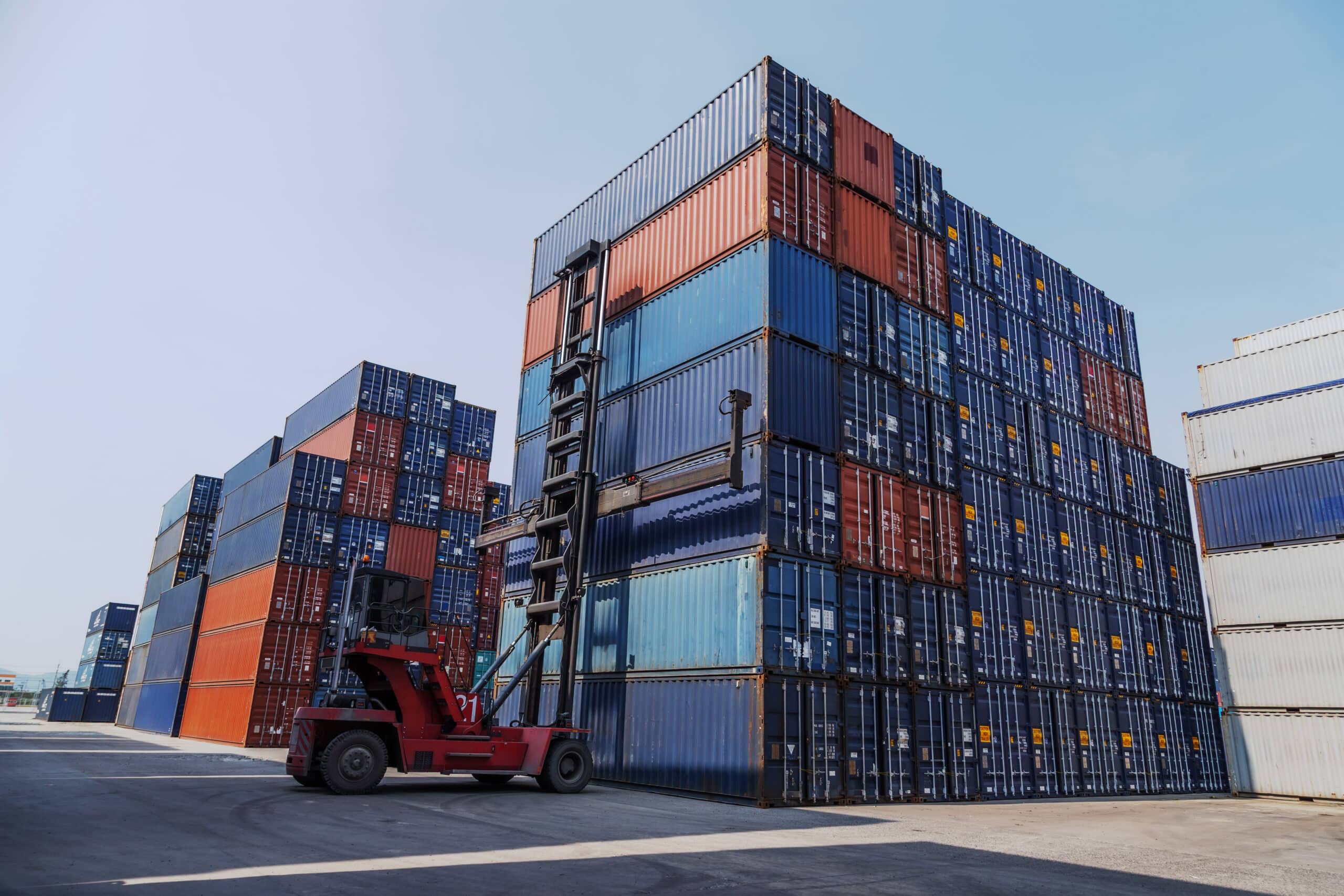
Cargo securement language matters more than it may seem. The difference between a void, a restraint point, or a working load limit is not just technical; it affects how freight is loaded, secured, inspected, and protected in transit. This glossary explains the key terms shippers and logistics managers need to know, with practical examples tied to trailers, containers, and intermodal shipping.
Understanding Cargo Securement
Cargo securement terms are not just technical language for manuals and compliance checklists. They shape how loads are planned, how teams communicate, and how well freight holds up once it leaves the dock. When everyone involved in shipping understands the difference between a void and a restraint point, or between working load limit and break strength, it becomes much easier to build securement practices that are more consistent, safer, and better suited to the realities of truck, rail, and intermodal shipping. For companies trying to reduce freight damage, improve loading repeatability, and standardize securement across operations, that shared understanding is part of the solution.
Core Cargo Securement Terms
Blocking and Bracing
At its core, blocking and bracing means using physical materials or securement devices to keep freight from moving during transport. A load can look fine when the doors close and still move when exposed to braking, vibration, rail impact, or rough handling between modes. Blocking and bracing give shippers a more repeatable way to stop that movement before it results in crushed product, rejected loads, or claims.
A practical example is a palletized shipment with open space behind it in a dry van. Without a physical restraint, that freight has room to build momentum. With the right structural securement system in place, the movement is controlled earlier and more consistently.
Cargo Securement
Cargo securement is the broader process of keeping freight stable throughout the trip. That includes the devices themselves, as well as the loading pattern, the amount of void space, the placement of restraint points, and whether the method is actually suited to the shipment.
That distinction matters because securement failures are often not caused by the absence of a system. More often, they happen because the securement method was too generic, too dependent on perfect installation, or not designed for the actual transport environment. For shippers trying to reduce damage claims and standardize outbound shipping, the goal is not just to secure the load, but to do it consistently across crews, facilities, and transport modes.
Load Shift
Load shift is the movement of freight after the shipment is underway.
It may show up as a leaning pallet when the doors open, but the bigger issue is usually what happened before that moment. Once freight starts moving, the shipment is already under stress. Packaging gets crushed, loads lose stability, and receivers may reject the freight entirely.
That is especially important in enclosed trailers and intermodal environments, where freight may be exposed to repeated vibration, impacts, and directional forces over long routes.
Void
A void is an empty space where there should not be any.
That could be a gap between load units, a space between freight and the trailer wall, or an open room at the rear of a partially loaded shipment. On paper, that might sound minor. On the road or rail, it becomes a risk factor.
A few inches of space can be enough for the freight to pick up force before contacting the restraint. That is one reason securement systems often emphasize direct contact, controlled fit, and structural restraint rather than relying on the load to stay where it was placed.
Dunnage
Dunnage is a broad term for materials used to protect or stabilize freight. In practice, that might include airbags, fillers, protective materials, or supplemental components used alongside a primary securement system. It is useful, but it is not always enough on its own. In many applications, especially with heavier or more demanding freight, a true structural restraint is more repeatable than relying on filler material alone.
Void Filler
Void filler is the specific material placed into an open space to reduce movement. A center void between pallet rows might seem harmless during loading, but once that shipment hits a rough route or transfers between modes, the lack of support becomes obvious. Void fillers can help, but the key is knowing whether the shipment needs simple gap control or a more robust blocking-and-bracing solution.
Working Load Limit and Break Strength
These two terms are often mixed up, so it is worth slowing down to distinguish between them.
Break strength tells you how much force it takes to break a material. Working load limit tells you the load that the material is designed to handle safely in normal use. One is the failure threshold. The other is the operating threshold.
This is more than a definition issue. Buyers who care about claims reduction, consistency, and compliance need to base decisions on safe working performance, not just the biggest number on a spec sheet.
Equipment and Securement System Terms
Load Bar or Load Lock
A load bar, sometimes called a load lock, is a bar placed between the walls of a trailer or similar transport space to help stop cargo from shifting. One-way load bar systems are designed to be more affordable, easier to install, and more durable than traditional alternatives, with a focus on standardization and repeatability.
For a shipper or logistics manager, the real question is what kind of load bar system gives crews the most consistent result across trailers, shifts, and facilities.
LogiTrack
LogiTrack is defined as a two-part load bar system consisting of a pocket and a track.
It was developed for situations where standard installations are not ideal, such as corrugated container walls, tight spaces near doors, and multimodal shipments. LogiTrack is the first multimodal one-way load bar system and can be used in trailers and containers with flat or corrugated walls.
That matters because intermodal securement is one of the places where generic advice breaks down fast. If a system is only convenient in easy trailer conditions, it does not solve much for shippers moving through truck, rail, and ocean networks.
Wedge System
Wedge systems use shaped components and a beam to create pressure across a trailer or container and hold freight in place.
These systems are part of a structural bracing approach, which is often more repeatable than methods that depend entirely on tension being checked and maintained. Buyers evaluating this type of securement usually care about damage claims, compliance, efficiency, and standardization.
In practical terms, that means a wedge system is not just a beam and two parts. It is a way to create a stronger, more controlled barrier in enclosed trailers and containers, especially when the load is heavier or the route is more demanding.
Airbag
Airbags, or dunnage bags, are used to fill lateral voids and help prevent side-to-side freight movement. Airbags are especially useful for lateral movement, while many other products are designed to address longitudinal movement.
That distinction matters because airbags are often most effective when paired with products designed to handle forward and backward movement, too. In other words, they are often a complement, not the full answer.
Floor Brace
The Floor Brace is a base-level restraint used in wood-floor trailers and containers. This kind of restraint is a solution for blocking and bracing pallets and other dense or rigid freight in wood-floored equipment.
Floor brace products reflect a broader argument that structural, standardized bracing can be a better answer than improvised blocking or overly tension-dependent methods in the wrong application. The Floor Brace eliminates the need to block and brace with heat-treated lumber in international shipments, which ties into efficiency and sustainability benefits.
Banding and Buckles
Banding is the restraint material used with strapping systems, while buckles are the hardware pieces used to fasten and tension that banding. The goal is not just to use a strap. It is to match the banding and buckle combination to the transport mode, the freight type, and the real force the shipment will face. That is especially important in intermodal service, where the wrong assumption about strength or application can get expensive fast.
Supporting System Components
Some glossary terms matter more in installation than in search on their own, but they still help explain how securement systems work in practice.
A pocket houses the wood beam in the assembled system, while a track adheres to the wall and connects with the pocket. A foam insert helps maintain outward pressure against the beam. Adhesive tape is the bonding material that holds certain components to trailer or container walls, and the release liner is the protective backing removed during installation.
On the wedge side, retention clips help keep the beam from popping out, a removal slot gives crews a place to pry the device loose during unloading, and a security seal slot allows tamper-evident sealing in some applications. These may sound like small details, but they matter because securement systems succeed or fail in the field through installation consistency, not just product specs.
Supporting Tools and Materials
A few terms are also worth knowing because they affect day-to-day use rather than overall strategy.
For airbags, the inflation valve allows air to enter and seal inside the bag, the inflator tool fills it, and the pressure gauge helps verify correct inflation. Polywoven refers to the durable woven polypropylene material used in dunnage bags. For floor brace systems, the duplex nail is the double-headed nail used for fastening, and the palm nailer is the compact pneumatic tool used to install those nails efficiently.
Intermodal and Compliance Terms
Intermodal Transportation
This intermodal transportation means one shipment moves through multiple transport modes, such as truck, rail, and ocean. A load that survives over-the-road trucking may still fail in rail service or ocean transit if the securement method was never designed for that environment. That is why intermodal securement planning has to account for stronger impacts, longer exposure, and more varied movement.
Over the Road (OTR)
Over the road refers to long-distance trucking, often across state lines. Many buyers are not shipping in a single-mode world. OTR may be just one leg of the trip. The securement method still has to perform after transfer, delay, rehandling, and vibration over time.
Full Truckload (FTL)
FTL means one shipment fills the truck.
That can make load planning easier, but it does not eliminate securement risk. A full trailer still needs restraint, especially when the goal is reducing damage claims and creating a standard loading method that can be repeated across facilities.
Less Than Truckload (LTL)
LTL means several shipments share trailer space.
This increases complexity because freight types, weights, and packaging styles are mixed together. It is one more example of why securement is ultimately about consistency and control, not just filling available space.
Container
A container is a standardized, reusable metal box used to transport goods across multiple transport modes.
Containers are especially relevant in securement planning because corrugated walls, intermodal movement, and tight loading areas create different conditions than a standard highway-only trailer.
Trailer
A trailer is a non-motorized vehicle pulled by a truck and used to carry goods over land.
In practical terms, trailer type still matters. A dry van, reefer, and intermodal container may all look like enclosed equipment from a distance, but they create different loading realities and different securement opportunities.
COFC and TOFC
COFC means container on flatcar, or containers placed directly on railroad flatcars without the chassis or trailer. TOFC is truck trailers loaded onto railroad flatcars for long-distance rail shipping.
These are important because they signal rail exposure, and rail is one of the environments where a more engineered, intermodal-ready securement approach becomes essential.
Bill of Lading (BOL)
The bill of lading is the legal document detailing the shipment and its destination.
It becomes especially relevant when freight is damaged or questioned on arrival. Once there is a claim, teams need a clear record of what was moved, where it moved, and how responsibility is documented.
DOT
The Department of Transportation is responsible for regulating the country’s transportation systems.
For shippers and logistics managers, DOT is not just a compliance acronym. It is part of the business case for securement done well. If freight is not properly restrained for roadway transport, the consequences can include violations, disruptions, and liability, alongside the actual freight damage.
AAR
AAR stands for the Association of American Railroads. For shippers moving in domestic intermodal service, this matters. Rail-securement expectations are different from standard trailer assumptions, and using an AAR-aligned method can be critical to both compliance and cargo protection.
FAQ on Cargo Terminology
What is the difference between blocking and bracing and tie-down securement?
Blocking and bracing uses physical barriers or structural restraints to keep freight from moving, while tie-down securement relies on tension to hold cargo in place. In enclosed trailers and containers, structural bracing often gives shippers a more repeatable method when consistency matters across facilities and crews.
Why do shippers choose one-way cargo securement systems?
One-way systems can help simplify loading, reduce retrieval issues, and make securement more consistent from one shipment to the next.
What causes cargo to shift in transit?
Cargo usually shifts because there is room for movement, the wrong securement method was used, or the restraint was not installed correctly. A load may appear stable at the dock, but braking, vibration, cornering, rail impact, and multi-mode transfers can expose gaps in the securement plan.
Why does working load limit matter more than break strength?
Break strength tells you how much force it takes to break a material, but working load limit tells you what that material can safely handle in normal service. For shipping decisions, working load limit is the more useful number because it reflects safe operating conditions, not just the maximum failure point.
When should shippers use airbags?
Airbags are useful when there is lateral open space that needs to be filled to reduce side-to-side movement. They are often used as a complement to other securement systems rather than as the only restraint. In many shipments, airbags help stabilize the load while bars, wedges, straps, or floor bracing manage the main restraint forces.
What makes intermodal cargo securement different?
Intermodal cargo securement has to account for more than highway vibration. Rail impact, container handling, and multi-stage transport expose freight to a wider range of forces, which is why securement methods often need to be more deliberate and mode-appropriate.
Why is standardizing cargo securement terminology important?
Standardized terminology helps shipping teams, warehouse crews, procurement staff, and logistics managers work from the same assumptions. That reduces miscommunication, makes training easier, and improves consistency across facilities. In practice, shared language supports shared process, and shared process usually leads to fewer loading errors and fewer damage claims.
Why Work With Logistick
If your team is looking for a more consistent way to secure freight, Logistick offers one-way Loadbar Systems, Wedge Systems, Floor Bracing Systems, Strapping Systems, and Intermodal solutions — all built around freight damage prevention, safety, efficiency, and recyclable materials. Each is designed to reduce damage, improve loading consistency, and support safer, more standardized shipping. Explore Logistick’s cargo securement products or contact the team to discuss a solution that fits your trailers, containers, freight type, and transportation mode.
0 Comments