
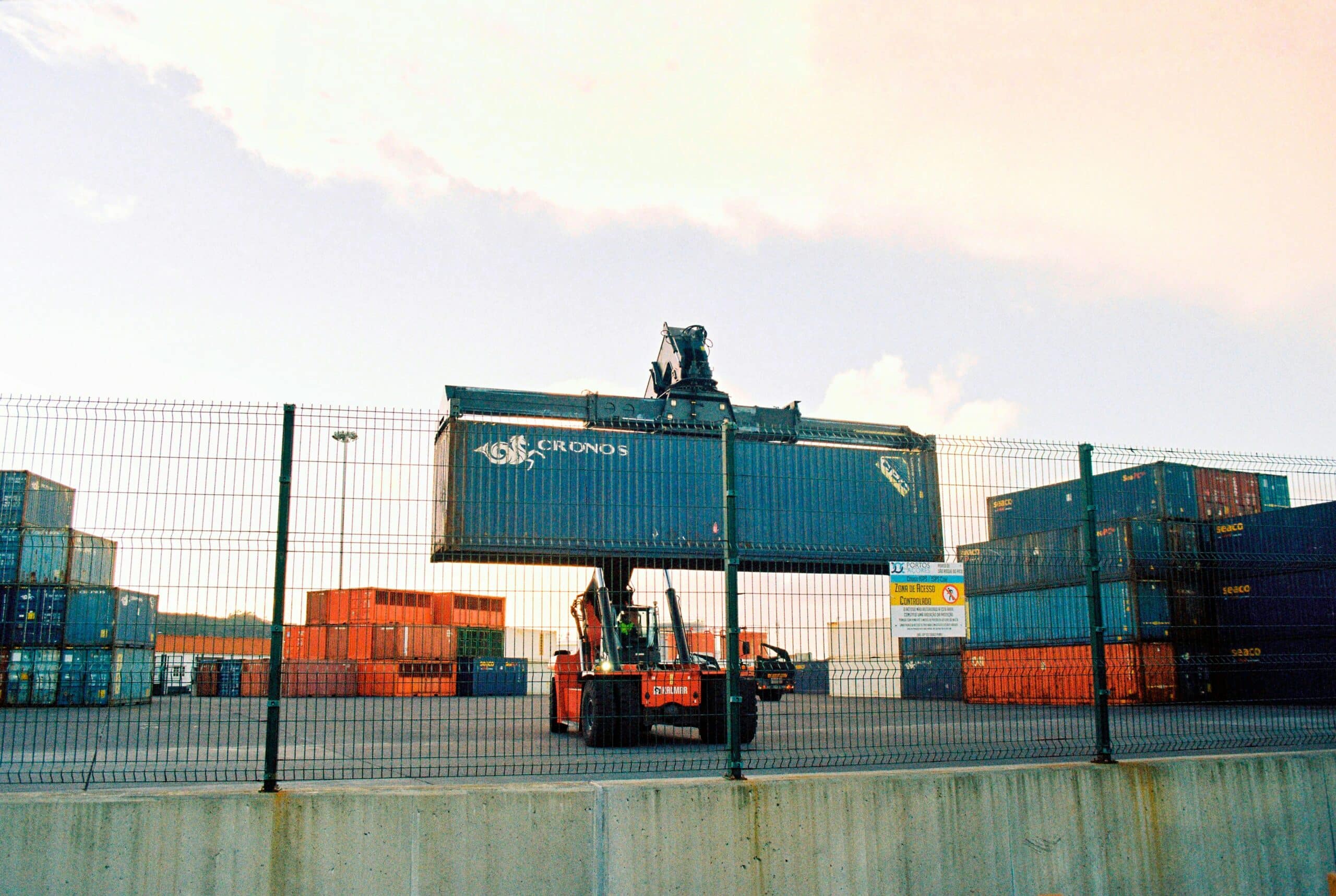
Loading an intermodal container properly is crucial for minimizing cargo damage and loss. The process starts with inspecting the container, planning weight distribution, and choosing securement for every mode in the route. Let’s take an in-depth look at how to properly load an intermodal container.
Plan for the Complete Intermodal Route
Intermodal cargo may travel by truck and rail, or by truck, rail, and ocean. Each mode subjects the load to a different combination of forces. For example, a container that appears stable during highway movement may not remain stable after rail coupling. Coupling impacts can create strong longitudinal forces that drive cargo toward the nose or doors.
For ocean transportation, the discussion applies only to ISO containers. These containers may experience rolling, pitching, lifting, stacking, and other handling conditions throughout the journey. The container structure is designed to carry external stacking loads through its corner posts. However, cargo inside the container still needs to be secured against the movement and handling forces associated with the ocean leg.
Given the varying forces that intermodal transportation can place on cargo, securement products and placement should reflect the entire route, not just the first leg.
Inspect the Container Before Loading
Once a travel plan is set, confirm that the chosen container is suitable for the commodity and transportation route. Check the floor, walls, roof, doors, seals, and corner posts for visible damage. The doors should close squarely, and the locking hardware should operate correctly.
The container should also be clean, dry, and compatible with the packaging and securement system chosen for the trip. Adhesive-mounted products require clean and dry application surfaces. Dust, condensation, frost, grease, and residue can interfere with adhesion, leading to product damage en route.
Do not load a container simply because it is available. If its condition could compromise the cargo or securement plan, report the problem and follow the appropriate process for rejecting or preparing the equipment.
Build a Stable Load From the Floor Up
A securement device cannot correct weak packaging or a damaged pallet. Before loading the container, inspect pallets, cartons, drums, crates, and wadding. Replace broken pallets and repair unstable unit loads rather than expecting blocking or strapping to hold it together. Using broken or damaged pallets can quickly lead to damaged cargo, especially in intermodal travel.
Confirm Weight and Distribution Limits
Before the first pallet enters the container, confirm the weight of the cargo, packaging, pallets, dunnage, and securement materials. The packed container must remain within the limits shown on its safety approval plate and any lower limits imposed by the equipment owner, carrier, terminal, route, or applicable law.
Weight should be distributed evenly across the floor to prevent tipping. Avoid concentrating dense cargo in one small area unless the floor loading and support have been evaluated for that configuration.
Heavy items generally belong low in the container, with lighter freight above when stacking is appropriate. Weight should also be balanced from side to side. An uneven load can affect handling and place added stress on the cargo, packaging, and securement system.
Control Every Void
Void space gives cargo room to move and build momentum. A small initial gap can become a larger problem after repeated vibration, braking, coupling impacts, and container handling.
As the container is loaded, watch for voids in these common areas:
- Between adjacent pallets
- Between freight and the sidewalls
- Between separate cargo sections
- At the nose of the container
- Between the final row and the doors
- Above or around irregular freight
Air bags and other void fillers can help control lateral movement between cargo units or between freight and the walls. Larger lengthwise gaps may require structural blocking, bracing, or strapping.
Void fill is usually a component of a securement plan, and it typically should not replace a primary restraint, like a loadbar or strapping system. A soft filler that limits side-to-side movement does not perform the same job as a rigid bulkhead designed to resist a strong longitudinal force.
Block Against Longitudinal Movement
Rail coupling impact makes accounting for forward longitudinal restraint especially important. Wedge systems create a bulkhead across the container using opposing wall-mounted components and a horizontal wood beam. Wedges should be placed as close to the freight as the approved loading method and container wall profile allow. Their purpose is to prevent cargo from beginning to move forward.
Logistick’s Intermodal Wedge® is an AAR-approved one-way system designed for light to medium weight loads. It can be installed on the peak or in the valley of compatible corrugated walls and is listed for ISO shipping containers. It works with a 4×4, two properly fastened 2×4s, or a single 2×4 where the approved application permits.
The Intermodal Wedge® XL is designed for medium to heavy weight freight in domestic intermodal containers. It combines a Wedge and Intermodal Brace to provide additional strength against longitudinal load shift. It should not automatically be substituted into an ISO ocean container application simply because it carries the Intermodal Wedge name. Confirm the container type and applicable approved loading method first.
Use Strapping for Irregular or Layered Loads
Rigid blocking works well when the load presents a stable face. Irregular cargo may also need strapping at selected heights or locations. The Intermodal Strap® from Logistick creates anchor points on compatible container walls and can be positioned where the freight needs restraint. It is intended for light- to medium-weight regular or irregular cargo and can also help separate stop-off shipments.
The complete securement system must include compatible banding and buckles selected for the load and route. Using an AAR-approved component does not make every possible configuration AAR-approved. Follow the applicable loading method, installation instructions, and current guidance.
Follow the Current AAR Loading Guidance
For containers entering North American rail interchange, consult the current AAR Circular 43-I and the applicable content in Section 6.0 of the AAR Intermodal Loading Guide. These materials address load securing, blocking, bracing, weight distribution, and void control.
Do not rely on an outdated loading diagram or assume that one approved component makes the entire shipment compliant. The commodity, container type, cargo weight, securement products, placement, and installation method must match the applicable guidance.
Complete a Final Inspection
Before closing the doors, walk through the load from nose to rear. Confirm that the weight remains balanced, pallets are stable, voids are controlled, and every securement component is correctly installed.
Photograph the finished load, including the cargo pattern, restraint placement, and area near the doors. These records can support training, process reviews, and potential claim investigations if cargo gets damaged.
Prepare the Container for Every Leg
Proper intermodal loading is a sequence, not a final step added after the container is full. Container inspection, weight distribution, packaging, void management, blocking, strapping, and documentation all need to work together.
If you are evaluating a new load configuration, Logistick can review photographs, weights, container details, and route information to help identify a securement system worth testing before the shipment enters service.
0 Comments