
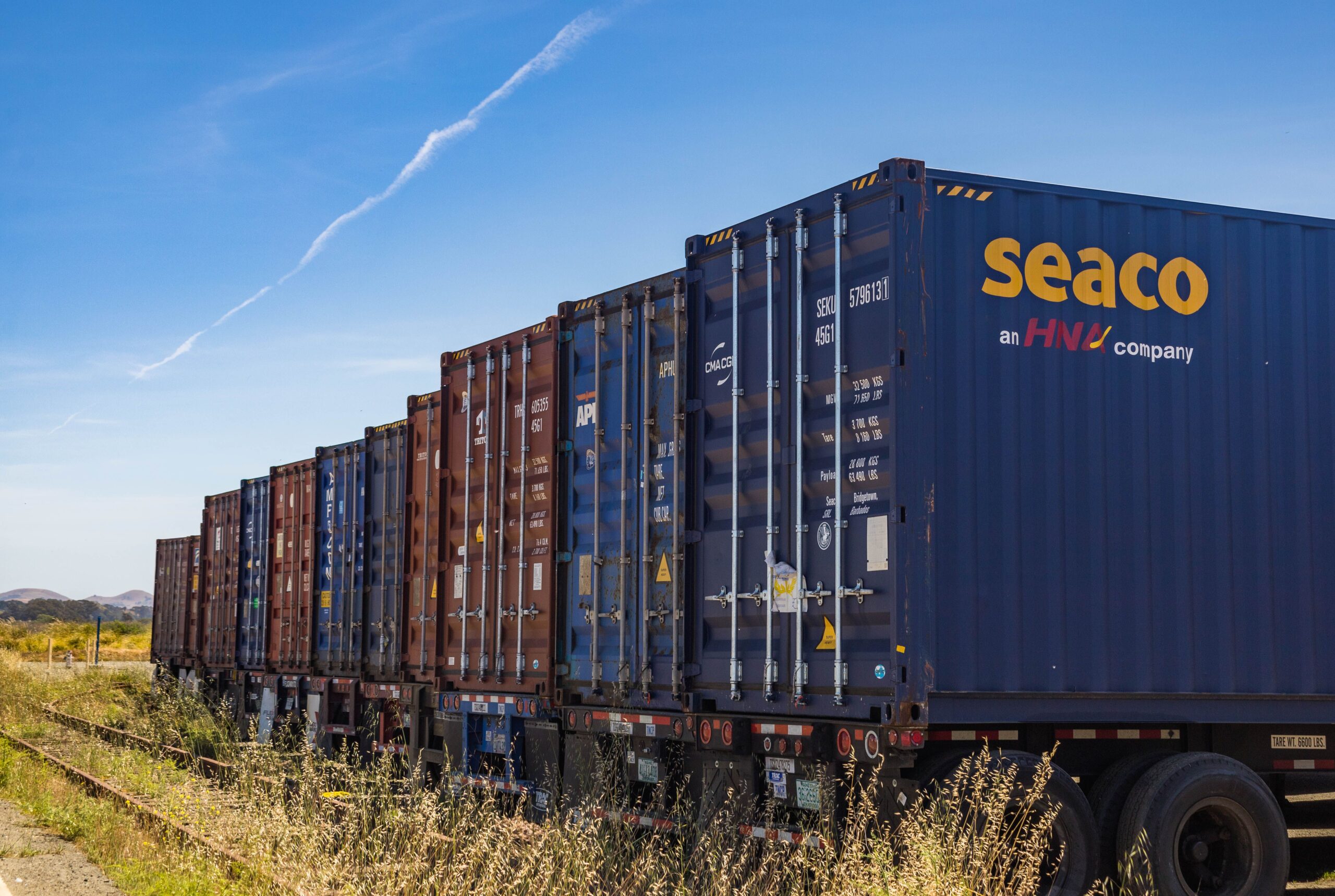
Blocking and bracing is the process of securing cargo inside an enclosed trailer or ISO shipping container so it cannot shift during transportation. A well-designed system controls forward, backward, and side-to-side movement while helping protect the freight, the equipment, and the people who load or unload it. Effective blocking and bracing starts before the trailer doors close. Shippers must consider the cargo’s weight, configuration, packaging, center of gravity, and available void space, then choose securement methods suited to the equipment and shipment.
Why Blocking and Bracing Matters
Cargo is subjected to acceleration, braking, turns, vibration, and impacts throughout its journey. Even heavy pallets can move when those forces act on them repeatedly. Once freight begins to shift, it can damage adjacent products, destabilize the trailer, or create a serious hazard when the doors are opened.
FMCSA cargo securement rules require that cargo transported by commercial motor vehicles be loaded and secured to prevent leakage, spillage, blowing, or falling from the vehicle. Securement systems must also prevent movement that could affect vehicle stability or safe operation.
Structural Bracing vs Tension-Based Securement
Cargo securement methods generally restrain freight through structural resistance, tension, or a combination of both.
Structural blocking and bracing place a rigid component against the cargo. Floor braces, wall-mounted wedges, and Loadbar systems create physical barriers that resist movement. These systems transfer force into the floor or walls of the enclosed trailer or container.
Tension-based securement uses straps, banding, buckles, or ratchets to apply force to the load or hold it against another surface. Tension systems can be useful for irregular freight or loads that require flexible restraint, but proper placement, tension and edge protection are essential.
Neither approach should be selected in isolation from the load configuration. Many shipments benefit from combining methods. For example, a shipper may use wedges or a Loadbar system to provide forward restraint, Floor Braces to control movement at floor level, and properly sized dunnage bags to fill lateral voids.
A Step-by-Step Approach for Enclosed Trailers
1. Inspect the trailer or container
Begin with a clean, serviceable piece of equipment. Inspect the floor and walls for damage, moisture, frost, debris, protruding fasteners, and other conditions that could interfere with securement.
Adhesive-backed products require a clean, dry application area. Floor-mounted products require a wood floor in good condition and an installation point clear of metal crossmembers or existing fasteners.
Do not assume the interior width is uniform. Trailer walls can bow or flex, and ISO containers have corrugated surfaces. Measure at the exact location where the securement system will be installed.
2. Evaluate the freight
Document the load’s approximate weight, dimensions, packaging, and configuration. Determine whether it is palletized, floor-loaded, rigid, fragile, or likely to settle during transportation.
Check how the weight is distributed. Dense or top-heavy freight may require a different approach from lightweight case goods, even when both occupy similar space.
Look for weak packaging surfaces. A brace should transfer force into a structurally sound part of the load, such as a pallet stringer or reinforced frame, rather than pressing against unsupported cartons or a pallet’s bottom deck board.
3. Identify every direction of possible movement
Evaluate forward and backward movement as well as lateral, side-to-side movement. Different products perform different jobs. Avoid treating one brace as a complete securement plan unless the application has been evaluated and the product is designed for that purpose.
4. Minimize open space
Blocking and bracing works best when securement components are positioned against the freight or when suitable void filler closes the remaining gap. Allowing cargo to build momentum before it reaches a brace increases the force placed on the freight and securement system.
Load the cargo tightly when its packaging permits. Fill appropriate voids and position structural braces close to the load so movement is restricted from the beginning.
5. Select the appropriate structural system
For freight in enclosed trailers or containers with wood floors, Floor Brace provides a practical alternative to conventional lumber blocking for light- to medium-weight applications. It is positioned against a pallet stringer or rigid floor-loaded cargo and secured to the floor with the specified duplex nails.
Floor Brace XL is intended for more demanding medium- to heavy-weight applications. It is manufactured from an engineered material and is recognized by the Association of American Railroads for lateral bracing applications. The required quantity and placement depend on the load’s weight and configuration.
For forward restraint in smooth-sided enclosed trailers, Wedge XL works with a 4×4 beam or two properly joined 2x4s and is intended for medium-weight loads. Super Wedge XL is the stronger option for heavy loads and works with a 4×4 beam. Both create a rigid bulkhead across the trailer and must be installed with the beam horizontal, properly fitted, and in contact with the freight.
When a horizontal barrier is appropriate for a light- to medium-weight load, a Loadbar system may also be considered.
6. Install the system according to its instructions
Follow the product-specific installation guide rather than relying on a general rule of thumb. Use the specified beam size, fasteners, product orientation, and measurement allowance.
Keep wood beams horizontal so their stronger dimension resists the load. Place paired wall components at the same height so the beam remains parallel with the floor. Do not remove required pressure components or reposition adhesive products after they have contacted the wall.
Floor braces must sit flat and make solid contact with a pallet stringer or suitable structural portion of the freight. Install all specified nails and relocate the brace when a nail encounters a floor fastener or metal crossmember.
7. Perform a final securement check
Before closing the doors, confirm that:
- Each component is fully seated, adhered, or fastened.
- Beams are level and in the correct orientation.
- Braces contact structurally sound portions of the load.
- Forward and lateral movement have both been addressed.
- Dunnage bags are correctly sized and inflated without bowing the walls.
- Nothing has been installed against a damaged or contaminated surface.
- The securement plan matches the approved product instructions.
Drivers must be familiar with cargo securement procedures and may be required to inspect or adjust securement devices during transportation, even when another party loaded the trailer.
Build a Repeatable Blocking and Bracing process
The safest approach is not to improvise at the dock. Establish documented loading patterns, train employees on correct product selection, and keep installation instructions available at each loading location. Logistick manufactures products that provide practical structural options for enclosed trailers and containers while reducing reliance on conventional lumber bracing.
Not sure which method fits your load? Request free samples and speak with a freight securement specialist about your equipment, cargo configuration, and transportation mode.
0 Comments